Sewer Line Repair Services for Local Homeowners
Request an estimate to start
A sewer line carries all the waste water out of your home. When it cracks, clogs, or collapses, the water has nowhere to go. It can back up into tubs, showers, and floor drains. That is scary, and it is smart to want help fast.
Sakeaffect Plumbing is a referral service. We do not repair pipes ourselves. We connect homeowners in Fort Lauderdale and the Fort Lauderdale area with independent local providers who handle sewer line repair, camera inspections, and blocked pipe services. You can request an estimate, compare what providers say, and choose what fits your home. This page walks you through the first steps, the repair options, and how to protect the new pipe afterward.
Sewage Backing Up? Breathe, Then Act
Seeing dirty water come up from a drain is upsetting. Take one slow breath. You do not need to solve everything right now. You only need to take a few safe steps and then ask for help.
One Step First: Slow the Water
Stop adding water to the system. This keeps the backup from getting worse.
- Do not flush toilets.
- Pause the washing machine and dishwasher.
- Skip showers and sink use.
- Keep the lid closed on any overflowing toilet.
Keep Everyone Safe
Sewage can carry germs. Keep children and pets out of the wet area. Wear rubber gloves and boots if you must step in it. Open a window if the smell is strong. Do not mix cleaning chemicals, because the fumes can be harmful.
Do Not Pour Drain Cleaner Down the Line
Store-bought drain chemicals rarely fix a sewer problem. They can also splash back on you or on the provider who arrives. Leave the pipe as it is.
Signs Your Sewer Line May Be Failing
Not every problem starts with a flood. Small clues often show up first.
Gurgles and Odd Smells
Gurgling from a toilet when the sink drains is a hint. So is a rotten egg or sewage smell in the yard or near a floor drain.
Several Drains Slow at Once
One slow sink is often a local clog. When the tub, toilet, and laundry all act up together, the main line is the likely cause.
Yard and Slab Clues
Look for soggy patches, sunken ground, or a lush green stripe in the lawn. In a slab home, damp spots or cracks in the floor can point to a leak under the concrete.
What Harms a Sewer Line
Knowing the cause helps you avoid a repeat.
Roots Looking for Water
In warm, wet climates, roots grow fast. They slip into tiny joints and swell into thick clogs.
Age and Pipe Material
Homes built from the 1970s on may have older clay, cast iron, or fiber pipe. These can crack, flake, or sag over time.
Heavy Rain and Shifting Soil
Daily summer storms soak the ground. Soft soil can move, and a moved pipe can separate at the joints. Hurricane season adds flooding and extra strain on the lines.
Wipes and Grease
Wipes, grease, and paper towels build up inside the pipe. They catch on rough spots and form a blockage.
How a Provider Finds the Problem
Good repair starts with seeing the pipe, not guessing.
Camera Inspection
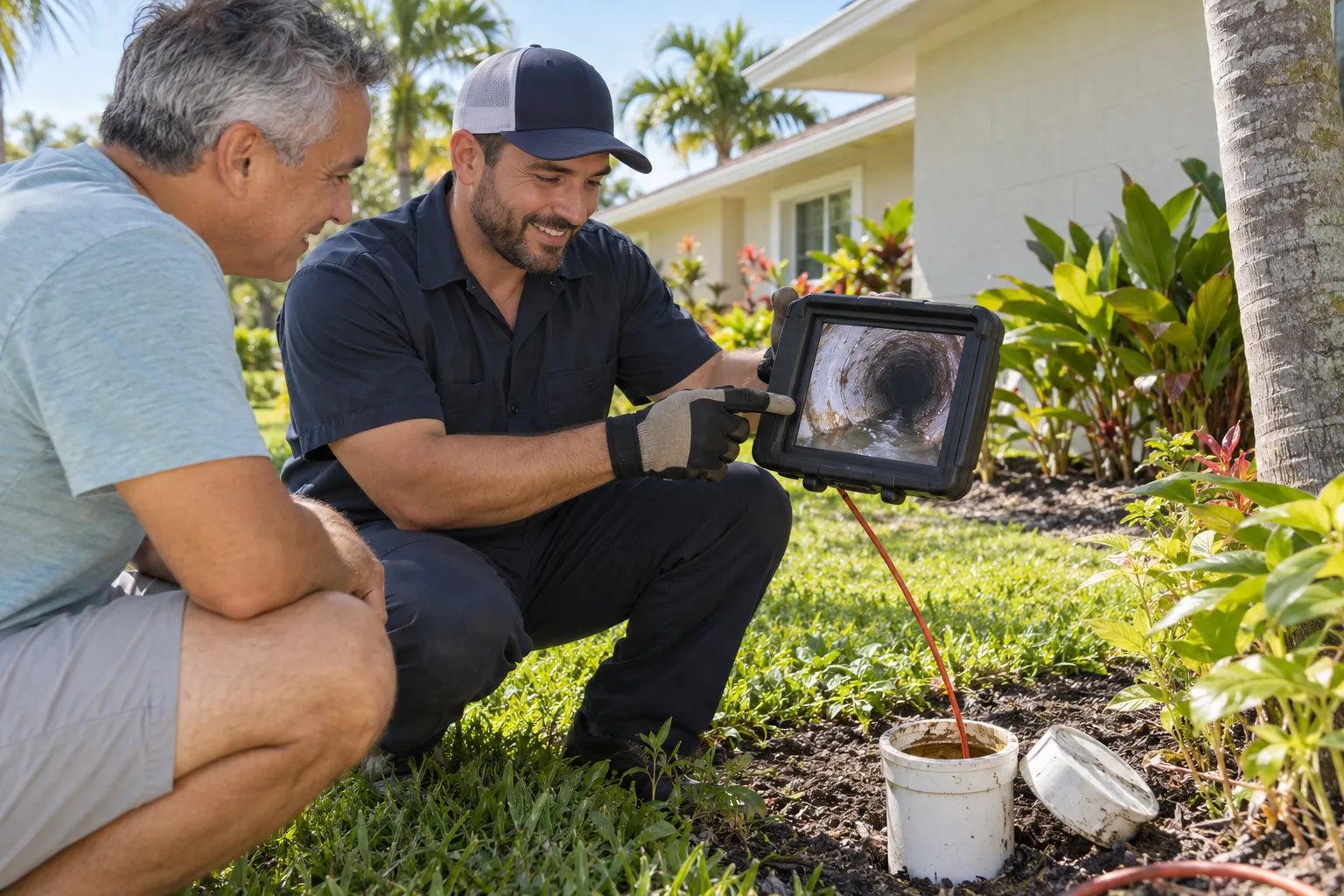
The provider feeds a small waterproof camera into the line. You can often watch the screen. It shows roots, cracks, sags, and breaks.
Locating the Spot
A tool on the camera sends a signal. The provider then marks the exact spot and depth above ground. This helps limit how much digging is needed.
Sewer Line Repair Options
The right fix depends on what the camera shows. Ask the provider to explain why they picked it.
Spot Repair
If only one section is damaged, the provider digs there and replaces that piece. It is often the smaller job.
Pipe Lining
A coated liner is pulled into the old pipe and hardens into a new pipe inside it. It needs little digging. It does not suit every pipe, especially one that has collapsed.
Pipe Bursting
A new pipe is pulled through as the old one is broken apart. It works well for long runs, with fewer trenches.
Full Replacement
When the line is badly worn, the provider may dig a trench and install a new line. It is bigger work, but it can settle the problem for many years.
Permits and Property Lines
Many areas require a permit for sewer work. The provider usually handles the paperwork, but ask who is doing it. Also ask where your part of the pipe ends. Some cities own the section near the street, and the homeowner owns the rest. Knowing that early can prevent surprises.
Questions to Ask Before You Say Yes
A calm list helps you decide.
- Can I see the camera video?
- Why is this repair the right fit for my pipe?
- Is the quote in writing, with all costs listed?
- Who pulls the permit?
- How will the yard or floor be put back?
- What warranty does your company offer on the work?
Providers in our network are independent, so each one sets its own terms. Always compare the details.
What About Insurance?
Some policies may cover sudden damage, but many do not cover worn or root-damaged pipes. Check your policy. Providers can often help document damage for a claim, so take photos before anything is cleaned up.
Fix It, Keep It
After the repair, a few habits protect your new pipe.
- Flush only toilet paper.
- Keep grease out of the sink.
- Ask about a cleanout access point.
- Schedule a camera check every few years if the home is older.
- Keep big trees and shrubs away from the line.
When you are ready, Request a callback to check provider availability, or use the form to ask for an estimate.
What's Included
Camera Inspection
A small camera shows what is wrong inside the pipe, so the repair plan is not a guess.
Spot Repairs
If only one section is cracked or broken, a provider can often replace just that piece.
Trenchless Options
Lining or bursting can fix some pipes with less digging, depending on the pipe's condition.
Full Replacement
A badly worn or collapsed line may need a new pipe, installed in a trench.
Typical Sewer Repair Costs
Sewer work varies a lot by pipe depth, length, soil, and method. These are typical U.S. ranges only. Your price may be higher or lower, so always ask for a written quote before work starts.
| Item | Typical range | Notes |
|---|---|---|
| Camera inspection | $100 – $500 | Shows the cause and exact location |
| Root clearing | $200 – $800 | May need repeating if roots return |
| Spot repair | $1,000 – $4,000 | Depends on depth and digging |
| Cleanout installation | $800 – $3,000 | Gives easier access for later service |
| Pipe lining | $3,000 – $10,000 | Less digging, not right for every pipe |
| Full line replacement | $3,000 – $25,000 | Cost grows with length and restoration |
How It Works
Stop Adding Water
Hold off on flushing, laundry, and showers so the backup does not spread further into your home.
Make Things Safe
Keep kids and pets away, wear gloves, and open windows for fresh air.
Request an Estimate
Tell us what you see, and we pass it to local providers.
Review and Choose
Compare written quotes, ask your questions, and pick the provider who fits your needs.
Why Call Sakeaffect Plumbing
Local Providers, One Request
Ask once and connect with independent providers who work near you.
Clear Guidance
Plain steps help you stay steady and make safe choices while you wait for help.
Compare Your Options
Request an estimate, read the details, and pick the provider and repair plan that fit you.
No Pressure
You decide who to hire. Asking for an estimate does not commit you to anything.
Other Services
Need sewer line repair services in Fort Lauderdale?
Tell us what is going on and request an estimate. A local provider in our network can follow up. Prefer to talk? Request a callback to check provider availability.
Sewer Line Repair Services FAQ
How do I know if my sewer line is broken?
Common signs include several slow drains at once, gurgling toilets, sewage smells, and wet or sunken spots in the yard. A camera inspection by a local provider is the surest way to confirm the problem.
Can a clogged sewer line fix itself?
Rarely. A small clog may shift for a while, but the cause is still in the pipe. Roots, cracks, and buildup tend to come back, so it is wise to have a provider look at it.
Does homeowners insurance cover sewer line repair?
Some policies may cover sudden damage, but many exclude wear, age, or root damage. Check your policy and ask your insurer. Providers can often help document the damage for a claim.
Request a callback
Tell us what is going on and request an estimate. A local provider in our network can follow up. Prefer to talk? Request a callback to check provider availability.
No obligation